Motorcycle road signs
Road Signs Every Motorcycle Rider Must Know
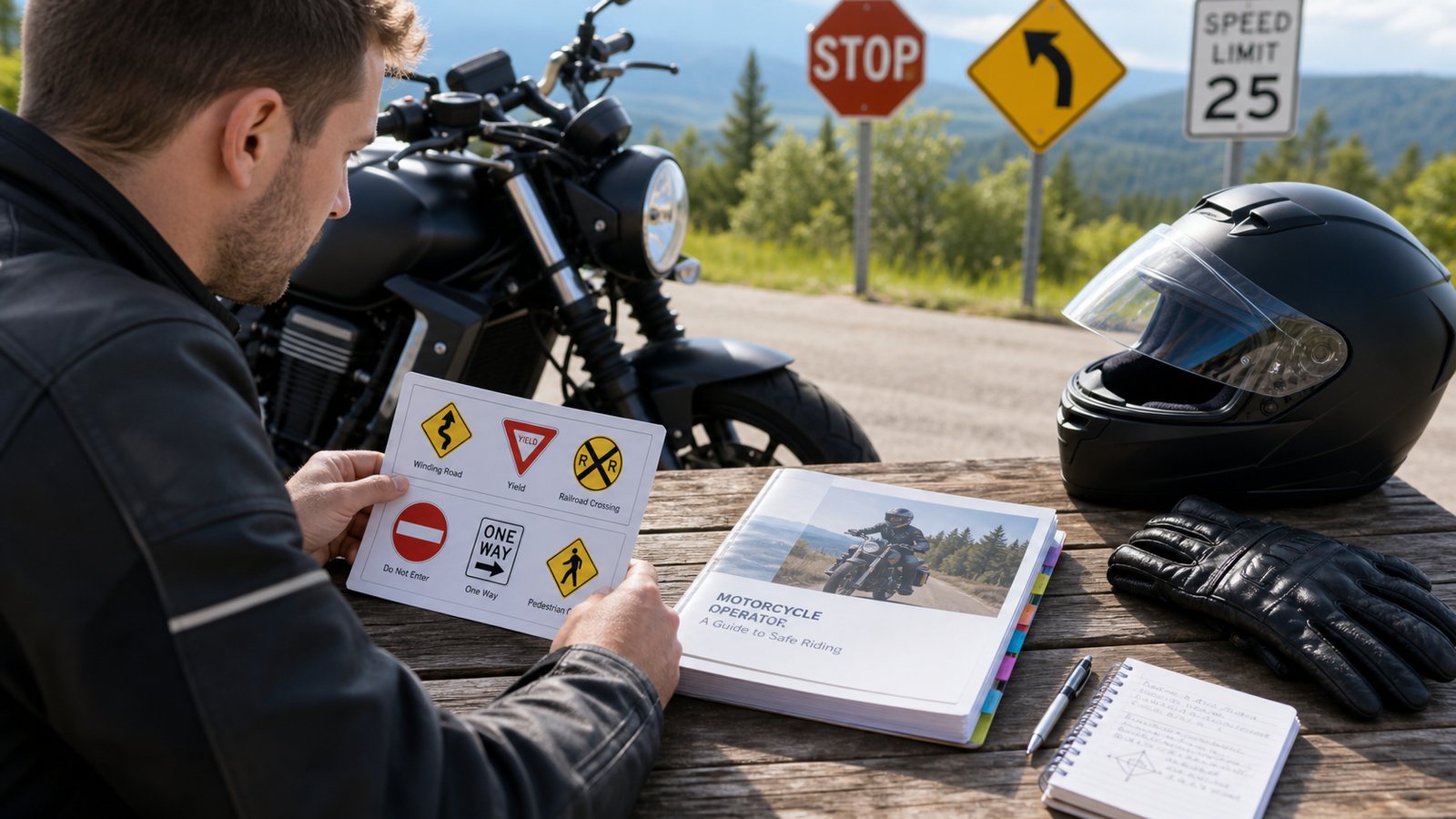
Road sign questions appear on every state motorcycle written test. While the signs themselves are the same signs drivers see in cars, motorcycle riders need to pay special attention to signs that affect traction, visibility, lane position, and braking distance differently than car driving.
Warning signs
Yellow signs that matter more on two wheels
Warning signs tell riders to prepare before the hazard arrives. On a motorcycle, the earlier warning matters because you may need to slow before leaning, adjust lane position, avoid loose material, or leave extra space behind traffic that may brake suddenly.
- Slippery When Wet: Reduce speed before the slick section. Painted lines, tar strips, metal plates, leaves, and oil can reduce motorcycle traction quickly.
- Curve Ahead and Sharp Turn: Set entry speed before the curve, look through the turn, and avoid sudden braking while leaned over.
- Steep Grade: Choose a steady speed, increase following distance, and be ready for longer stopping distance downhill.
- Railroad Crossing: Cross tracks as close to a right angle as practical and avoid braking hard on the rails.
- Animal Crossing: Scan shoulders early. Smaller animals can still cause a rider to swerve or lose balance.
Regulatory signs
Red, white, and black signs that tell you the law
Regulatory signs tell you what is required, prohibited, or limited. For motorcycle riders, ignoring these signs creates both legal risk and safety risk because a sudden correction on a motorcycle can be less forgiving than in a car.
- Stop and Yield: Make a complete, stable stop where required and scan for turning vehicles before entering the intersection.
- Speed Limit: Treat the posted limit as the maximum for good conditions. Curves, rain, gravel, and traffic may require a slower motorcycle speed.
- No U-Turn: Do not attempt tight turns where prohibited. Low-speed motorcycle turns need room, balance, and clear sight distance.
- One Way: Confirm the direction before turning. A wrong-way turn gives riders very little reaction time.
- Do Not Enter and Wrong Way: Stop immediately if you see these signs from your lane. They usually mean you are entering against traffic.
Work zones
Orange signs for gravel, uneven pavement, and narrow lanes
Work zones are one of the most important road-sign categories for motorcycle riders. Temporary lanes, steel plates, grooved pavement, loose gravel, raised edges, and changing traffic patterns can reduce traction and leave less space to recover.
- Road Work Ahead: Slow early and create extra following distance before traffic compresses.
- Reduced Speed Ahead: Roll off smoothly rather than braking late in a rough or crowded lane.
- Flagger Ahead: Watch both the flagger and the traffic behind you. Be ready for a full stop.
- Uneven Lanes or Rough Road: Keep the motorcycle as upright as possible when crossing edges, plates, or rough patches.
Guide signs
Green and blue signs help riders plan early
Guide and service signs may feel less urgent than warning signs, but they still matter for riders. A motorcycle rider should choose exits, ramps, fuel stops, rest areas, and lane changes early so there is no rushed movement across traffic.
- Exit signs: Move into the correct lane early and avoid last-second lane changes near ramps.
- Route markers: Confirm direction before entering a freeway, especially around split ramps.
- Gas, hospital, and rest area signs: Plan stops before fatigue, weather, or low fuel becomes a safety problem.
- Lane-use guide signs: Watch overhead arrows and lane assignment signs before intersections or freeway junctions.
Quick reference
Common road signs to know before your motorcycle written test
Before you use the table: sign mix varies by state, and your official motorcycle manual controls the exact written-test content. Use this table as a study shortcut, then verify with your state source.
| Sign name | Color | Shape | What to do when you see it |
|---|---|---|---|
| Slippery When Wet | Yellow | Diamond | Slow before the slick area and avoid sharp braking or sudden lean changes. |
| Curve Ahead | Yellow | Diamond | Reduce speed before the curve and look through the turn. |
| Sharp Turn | Yellow | Diamond | Set entry speed early and keep a smooth throttle through the turn. |
| Winding Road | Yellow | Diamond | Expect repeated curves and keep extra room from vehicles ahead. |
| Steep Grade | Yellow | Diamond | Control speed early and leave more stopping distance downhill. |
| Railroad Crossing | Yellow or white | Round or crossbuck | Cross tracks carefully and avoid hard braking on rails. |
| Animal Crossing | Yellow | Diamond | Scan shoulders and slow if visibility is limited. |
| Merge | Yellow | Diamond | Check mirrors and blind spots, then create space smoothly. |
| Lane Ends | Yellow | Diamond | Plan your lane change early instead of moving at the last second. |
| School Crossing | Yellow-green | Pentagon or sign panel | Slow and watch for children stepping into the roadway. |
| Pedestrian Crossing | Yellow or yellow-green | Diamond or sign panel | Cover the brakes and prepare for a stop. |
| Stop | Red | Octagon | Make a complete stop and scan both ways before moving. |
| Yield | Red and white | Triangle | Slow, give way to traffic or pedestrians, and stop if needed. |
| Speed Limit | White | Rectangle | Stay at or below the limit and slow more for rain, curves, or gravel. |
| No U-Turn | White/red/black | Rectangle | Do not make a U-turn at that location. |
| One Way | Black and white | Rectangle | Travel only in the arrow direction. |
| Do Not Enter | Red and white | Square or rectangle | Do not enter that roadway or ramp. |
| Wrong Way | Red and white | Rectangle | Stop safely and correct course before entering traffic. |
| Keep Right | White/black | Rectangle | Stay to the correct side of an island, divider, or obstruction. |
| No Passing Zone | Yellow | Pennant | Do not pass; maintain lane position and following distance. |
| Road Work Ahead | Orange | Diamond | Slow early and expect workers, equipment, and changing lanes. |
| Flagger Ahead | Orange | Diamond | Watch for hand signals and prepare to stop. |
| Uneven Lanes | Orange | Diamond | Cross lane height changes carefully with the bike upright. |
| Exit Guide | Green | Rectangle | Move to the proper lane early for ramps and exits. |
| Hospital, Gas, Rest Area | Blue | Rectangle | Use service signs to plan stops before fatigue, low fuel, or weather becomes a problem. |
The exact sign mix on your written test is controlled by your state DMV or licensing agency. Use this table as a study guide, then confirm details in your state motorcycle manual.
Practice road signs
Ready to test your road sign knowledge?
The motorcycle permit practice test includes road signs, rider hazards, lane positioning, braking, weather, passenger, and emergency questions. If you are still learning the full licensing path, review how to get a motorcycle license before test day.
Official sources
Source links to verify before test day
US Permit Prep is an independent study site and is not affiliated with FHWA, any DMV, or any state licensing agency. Road sign standards and state motorcycle testing rules can change, so verify final requirements with official sources.
Also in the motorcycle section
Keep studying in the motorcycle guide
FAQ
Motorcycle road sign questions
Are motorcycle road sign questions different from car permit questions?
Most road signs are the same for cars and motorcycles, but riders need to think about them differently. Curve, slippery road, railroad, work zone, and merge signs can affect balance, traction, lane position, and braking distance more sharply on two wheels.
Which road signs should motorcycle riders study first?
Start with warning signs such as Slippery When Wet, Curve Ahead, Steep Grade, Railroad Crossing, Merge, Lane Ends, and animal crossing signs. Then review regulatory signs such as Stop, Yield, Speed Limit, One Way, Do Not Enter, and No U-Turn.
Why are work zone signs important for motorcycle riders?
Work zones often include loose gravel, steel plates, uneven lanes, narrow shoulders, temporary markings, and sudden speed changes. These conditions can reduce traction and give motorcycle riders less room to recover from a mistake.
Do motorcycle written tests include guide and service signs?
Many motorcycle written tests include common guide, service, and route signs because riders must plan exits, fuel stops, rest areas, and lane changes safely. The exact mix varies by state, so review your state motorcycle manual too.
Can I practice motorcycle road signs on US Permit Prep?
Yes. The motorcycle permit practice test includes road sign and hazard-awareness questions along with rider control, lane position, passenger, weather, and emergency-situation topics.
General sign practice
Need the full road signs study hub?
If you want to review car-permit and general DMV road sign categories, use the Road Signs Practice Test & Study Guide.
Open the Road Signs Study Hub →