Insurance basics
Car Insurance for Teen Permit Drivers (2026)
Insurance rules can feel confusing when a teen gets a learner permit. This guide explains what parents usually need to ask, when coverage may change, and how to plan before the road test.
June 28, 2026
Insurance guidance, notification reminders, and cost discussion were reviewed for general planning. Always confirm your own policy with your insurer or agent.
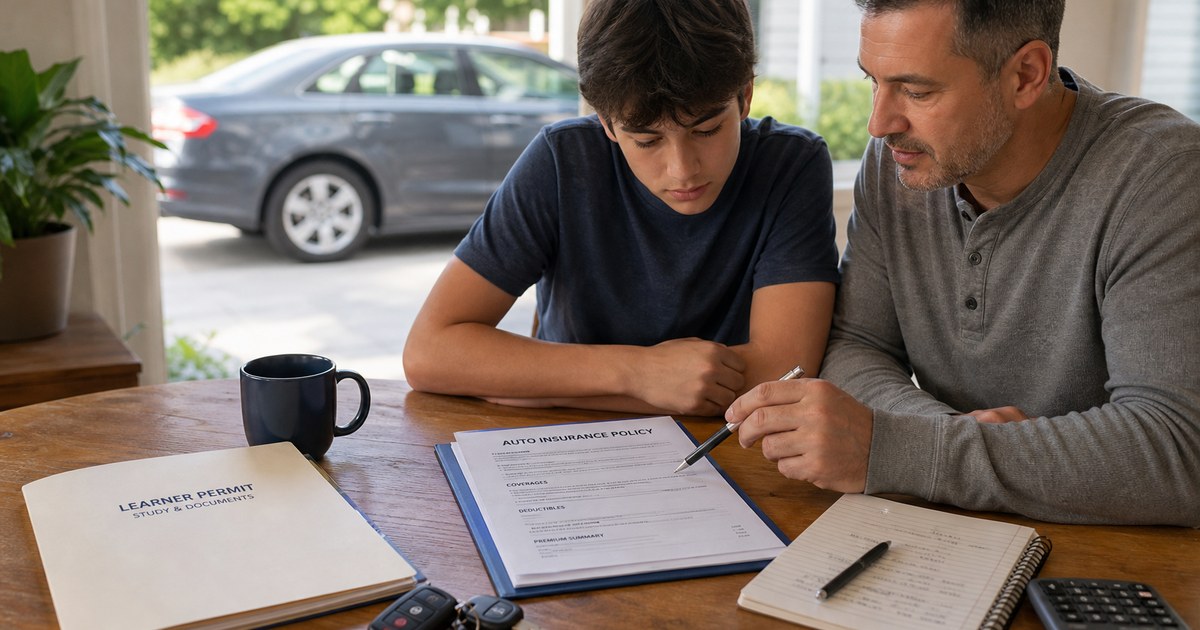
Quick answer
Call the insurer before the first practice drive
Most permit drivers do not need a separate policy while they are supervised, but insurer rules vary. Call when the learner permit is issued, ask whether the teen must be listed during the permit stage, and confirm what changes after the road test.
Do not rely only on DMV rules for this. The state may focus on vehicle insurance and financial responsibility, while the insurer decides when a household teen must be reported or rated on the policy.
Do permit drivers need their own insurance?
In most everyday situations, a teen with a learner permit practices in a parent or supervising adult vehicle and is not driving alone. Because of that, a separate policy is rarely the first step during the permit stage. The household policy may treat the teen as a permissive or supervised driver, but the exact rule comes from the insurer and policy language.
- Permit drivers are usually supervised, not independent drivers.
- A separate teen policy is uncommon during the learner stage, but not impossible in unusual household or vehicle situations.
- The coverage situation changes when the teen passes the road test and becomes licensed to drive without the same learner supervision.
If your teen just received a permit, review the first steps after getting a permit so insurance, restrictions, and supervised practice all stay aligned.
Some insurers want to know when a teen gets a learner permit. Others only require the teen to be listed when they become fully licensed. Because policies differ, the practical recommendation is to call your insurer or agent when the permit is issued and ask for the rule in writing or in your account notes.
- Ask whether the teen must be listed during the permit stage.
- Ask whether coverage applies while the teen is supervised in each household vehicle.
- Ask when the teen must be added as a rated driver.
- Ask whether failing to notify could affect a claim.
State and insurer notification differences
There is no single national rule that says every permit driver is handled the same way by every insurance company. In many states, the legal requirement is that the vehicle has valid insurance or financial responsibility, while the household policy decides when a teen must be reported or rated. Use these examples as a planning checklist, then confirm your own policy.
| State or source example | Permit-stage takeaway | Question to ask your insurer |
|---|---|---|
| Texas | The Texas Department of Insurance tells families to contact their company or agent about teen drivers because company rules can differ. | Does the teen need to be listed when the learner permit is issued, or only when licensed? |
| California | California drivers and vehicle owners must meet financial responsibility rules, but household teen-driver listing is handled through the insurer and policy. | Is the teen covered while supervised in each household vehicle, and when do they become a rated driver? |
| New York | New York focuses insurance on the registered vehicle. A learner may practice only under permit restrictions, and the policy still controls household driver reporting. | Does the policy cover supervised practice in every vehicle the teen may drive? |
| Florida | Florida has financial responsibility and teen licensing rules, but insurer notification timing can still differ by company. | Should the permit driver be added now, or should the policy be updated immediately after the road test? |
| Any state | Permit notification is often policy-based, not a simple DMV checkbox. | Can the company send or note written confirmation of the permit-stage coverage rule? |
How much does adding a teen driver cost?
Costs vary widely by state, household, vehicle, coverage limits, insurer, and the teen driver profile. As a planning benchmark, a Forbes Advisor analysis found that adding a 16-year-old to a parent policy averages about $3,211 per year, while a separate 16-year-old policy averages about $9,561 per year. Treat those numbers as a national benchmark, not your exact quote.
The most useful next step is to ask your current insurer for the permit-stage rule now and a licensed-teen quote before the road test. Do not assume your neighbor’s cost will match yours.
- Car type: newer, faster, or costlier vehicles can raise premiums.
- Location: state, ZIP code, theft, crash, and repair-cost patterns can affect price.
- Coverage choices: liability limits, collision, comprehensive, and deductibles matter.
- Driver profile: grades, training, claim history, tickets, and household driving record can matter.
Discounts that help
Ask about discounts before the teen becomes licensed, because some require proof or enrollment. Availability varies by insurer and state.
- Good student discount: often tied to a B average or higher, though rules vary.
- Defensive driving or driver education discount: may apply after an approved course.
- Telematics or monitoring app discount: some insurers offer savings for safe-driving data.
- Multi-car discount: may apply when the household insures more than one vehicle.
- Bundling discount: some households save by combining eligible policies, but compare carefully.
After licensing
What happens after they pass the road test?
Permit-stage coverage usually ends once the teen becomes a licensed driver. At that point, the teen normally needs to be added as a rated driver or otherwise handled under the household policy. Rates typically increase at this stage because the teen can now drive with more independence.
Before the appointment, use the road test checklist so vehicle documents, insurance proof, and test-day items are ready.
Insurance FAQs for permit drivers
Does a teen with a learner permit need their own car insurance policy?
In many cases, a teen permit driver is covered while practicing in a parent or supervising adult vehicle, but rules depend on the insurer and policy. Families should contact their insurer when the permit is issued and before the teen drives.
When should parents tell insurance about a learner permit?
Some insurers want to know when the teen receives a permit, while others require the teen to be added when they become licensed. Calling when the permit is issued is the safest planning step because it documents the situation before any claim.
How much does adding a teen driver cost?
Costs vary widely by state, vehicle, coverage, household, insurer, and driver profile. A Forbes Advisor analysis found that adding a 16-year-old to a parent policy averages about $3,211 per year, while a separate teen-only policy can average much higher; families should request quotes before the road test.
What discounts can help teen driver insurance costs?
Common discounts may include good student, approved driver education or defensive driving, telematics or safe-driving programs, multi-car, and bundling discounts. Availability and savings vary by insurer and state.
Sources and review note
This page is informational only and does not recommend any insurance company, policy, or sponsored product. Always check your own insurance policy, insurer, agent, and state rules before relying on coverage.
- Texas Department of Insurance: adding a teen driver
- NAIC consumer auto insurance information
- Forbes Advisor 16-year-old driver cost benchmark
Need the full post-permit path again? Go back to the After Permit hub.