Practice plan
How to Practice Driving With a Learner Permit (2026)
Good practice is not just about logging hours. It is about progressively building skills, route by route, until the learner can handle real traffic calmly and safely.
June 28, 2026
Practice stages, safety reminders, and post-permit links were reviewed for learner drivers and supervising adults.
Quick answer
Build skill in stages, not all at once
Start where mistakes are low-pressure, then add difficulty only when the previous stage feels steady. Move from empty lots to quiet roads, busier intersections, highways, night driving, and light adverse conditions while following your state permit restrictions every time.
Stage 1: Empty Parking Lots (Start Here)
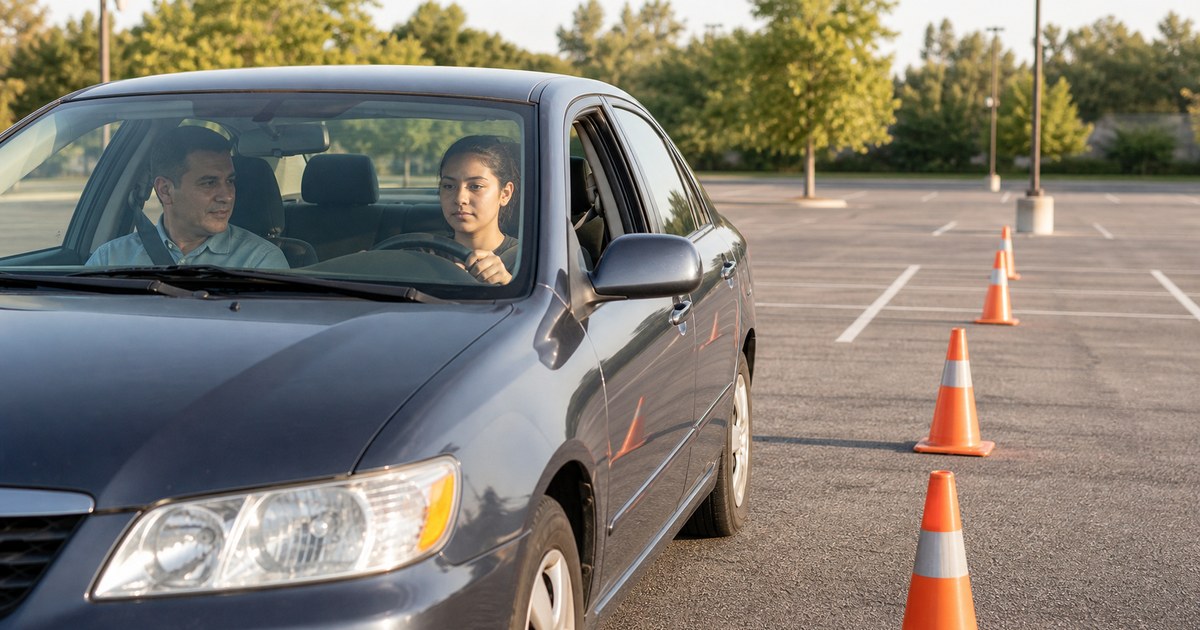
Start in a quiet, open area where the learner can focus on vehicle control without traffic pressure. The goal is to make basic movements smooth and predictable before adding signs, pedestrians, or other vehicles.
- Practice gentle acceleration, smooth braking, wide and tight turns, mirror checks, and keeping both hands steady on the wheel.
- Use parking spaces to practice perpendicular parking, angle parking, backing out, and simple reference points.
- Introduce parallel parking only after basic steering and braking feel calm.
- Before moving on, the learner should stop smoothly, steer without overcorrecting, check mirrors naturally, and follow short instructions without panic.
Stage 2: Quiet Residential Roads (When Control Feels Steady)
Move to low-speed neighborhood streets when parking-lot control is steady. Choose routes with light traffic, clear visibility, and simple turns.
- Practice holding a consistent speed without drifting above the limit.
- Use stop signs and yield signs to build full-stop habits, right-of-way judgment, and scanning.
- Add backing up, curbside stops, three-point turns, and driveway turns where legal and safe.
- Coach the learner to look far enough ahead instead of staring directly in front of the car.
Stage 3: Busier Roads and Intersections (Add Gradually)
When the learner can manage quiet roads calmly, add moderate traffic and more decision-making. Keep routes familiar at first so the learner is not processing every challenge at once.
- Practice lane changes with mirror, signal, blind-spot check, smooth movement, and speed control.
- Work through traffic lights, protected and unprotected turns, crosswalks, and pedestrian awareness.
- Introduce merging on lower-speed roads before moving to highway ramps.
- Debrief after the drive: one thing that improved, one thing to repeat next time, and one route to try again.
Stage 4: Highway Driving
Highway practice should wait until the learner can control speed, scan mirrors, change lanes, and handle busier intersections without constant correction. Also check your state permit rules before entering highways.
- Start with a simple on-ramp and exit-ramp route at a quieter time of day.
- Practice accelerating on the ramp, finding a safe gap, merging smoothly, and maintaining lane position.
- Keep a safe following distance and avoid tailgating when traffic speed changes.
- Use exits to practice planning early, signaling, slowing on the ramp, and resetting after a mistake.
Stage 5: Night Driving
Night driving adds lower visibility, glare, fatigue, and slower hazard recognition. Start only when daytime driving is steady and your state permit rules allow nighttime practice.
- Begin around dusk on a familiar quiet route before trying dark roads or busier areas.
- Practice headlights, high beams where legal, dashboard brightness, and windshield visibility.
- Increase following distance because reaction time and visibility are reduced.
- Stop the session if the learner seems tired, overwhelmed, or unable to scan ahead.
Stage 6: Rain and Adverse Conditions
Do not make bad weather the first real-road lesson. Once basic skills are steady, mild rain can teach smooth braking, extra following distance, windshield-wiper use, defogging, and slower decision-making.
- Start with light rain on a familiar route, not heavy storms, flooding, ice, or poor visibility.
- Reduce speed and leave more space than usual, especially behind large vehicles.
- Practice smooth steering and braking so the learner does not make sudden corrections on wet roads.
- Talk through when to postpone driving. Safe drivers know when conditions are beyond their current skill level.
Practice checklist
Download a practice session checklist
Use this printable checklist before and after each supervised drive. It helps the learner and supervisor choose one skill goal, confirm basic safety items, and record what to repeat next time.
After each session, record the date, duration, road type, conditions, and skills practiced. Use the supervised-hours page to track your hours against your state requirement. When parking, turns, lane changes, intersections, night driving, and moderate traffic feel consistent, review the road test checklist before scheduling.
Need the full post-permit path again? Go back to the After Permit hub.
Practice driving FAQs
Where should a new learner driver practice first?
Start in an empty parking lot or another low-risk practice area. Work on smooth starts, stops, steering, turning, parking, mirror checks, and basic vehicle control before moving to neighborhood roads.
When should a learner driver start highway practice?
Highway practice should come only after the learner can hold lane position, control speed, scan mirrors, change lanes calmly, and follow directions on busier roads. Also check whether the state permit rules allow highway driving at that stage.
How often should a learner driver practice?
Short, regular sessions usually work better than rare long sessions. Many families plan several weekly drives and gradually add road types, traffic levels, nighttime practice, and weather conditions.
Should learners practice in rain or at night?
Yes, but only after basic control is steady and the supervising adult believes conditions are appropriate. Start with light rain or quiet nighttime routes, then increase difficulty slowly while following state permit restrictions.
Sources and review note
CDC teen-driver guidance encourages supervised practice over time on varied roads, at different times of day, and in varied weather and traffic conditions. NHTSA novice-driver standards also emphasize an extended learner period with wide, increasingly challenging supervised practice. US Permit Prep is independent and is not a DMV or state agency.