Test-day vehicle check
Road Test Vehicle Requirements by State
A safe drive cannot begin if the car is rejected at check-in. Use this checklist to inspect the vehicle, pack registration and insurance records, and identify state rules for rentals, cameras, brakes, and accompanying drivers.
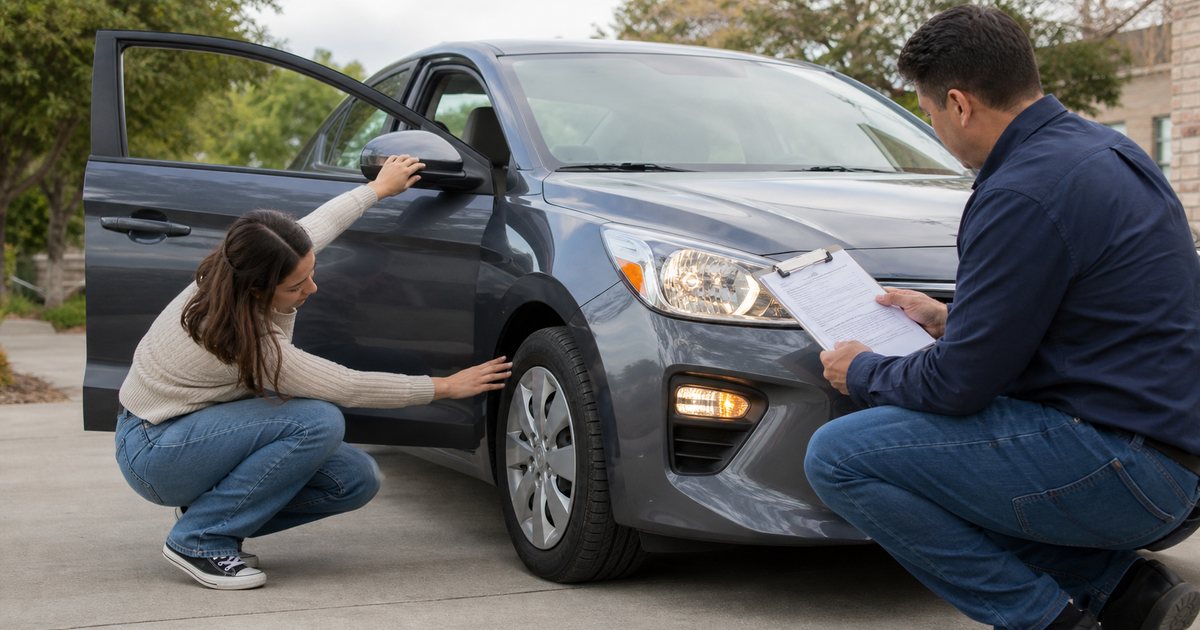
Master checklist
Inspect these items before leaving for the test
Exact rejection standards vary, but these checks cover the equipment repeatedly named in state road-test guidance.
| Check | What to verify | Why the test may be delayed or canceled |
|---|---|---|
| Foot brake | Pedal feels firm and stops the car normally. | Unsafe braking or excessive pedal travel. |
| Parking or emergency brake | Brake holds and releases correctly; examiner access meets state rules. | Brake does not work or examiner cannot use the required control. |
| Brake lights | Both required rear brake lamps illuminate. | One or more required lamps do not work. |
| Turn signals | Front and rear left and right signals operate. | Signal is missing, damaged, or inoperative. |
| Headlights and other lamps | Required lights work for the test conditions. | Equipment needed for legal operation is not functional. |
| Horn | Audible from the driver’s normal control position. | Horn is missing or cannot be heard. |
| Tires | Proper inflation, legal tread, no exposed cord, bulge, or visible damage. | Flat, bald, damaged, or unsafe tire. |
| Windshield and wipers | Clear view with no unsafe obstruction; wipers operate. | Driver view is obstructed or required wipers fail. |
| Mirrors | Required mirrors are present, secure, and usable. | Missing, broken, or unusable mirror. |
| Doors | Driver and passenger doors open and close from inside and outside as required. | Examiner cannot safely enter or exit. |
| Seat belts and seats | Working belts and a secure passenger seat for the examiner. | Missing or broken belt, unsafe seat, or no examiner seating position. |
| License plates and inspection | Current plates, stickers, and inspection where required. | Expired or missing legal vehicle credential. |
Do not rely on dashboard warning lights alone: have another person watch the exterior lamps while you operate the brake and turn controls. Check tire condition in daylight.
Pack the records
Documents commonly required for the test car
- Current registration: the record should match the vehicle being used and satisfy the state’s current-registration rule.
- Proof of insurance: bring the format your state accepts and verify that coverage is active on test day.
- Applicant permit or credential: bring the original learner permit, examination permit, or other required document.
- Accompanying driver’s license: the supervising or accompanying driver must meet the state’s age, license, and sometimes relationship rules.
- Rental agreement when applicable: it may need to name the applicant and expressly permit use for a road test.
- Appointment or course records: bring any confirmation, log, driver-education certificate, or eligibility proof required for your applicant type.
State examples
Road-test vehicle requirements differ by state
The examples below highlight rules that can change whether a car is accepted. They are not a substitute for the appointment instructions issued to you.
| State | Published vehicle or document notes | Technology or special rule | Official source |
|---|---|---|---|
| Arizona | Bring a vehicle in good operating condition with valid registration and insurance. A rental applicant must be named on the rental agreement. | Parking assistance and other listed ADAS features may not be used during the road test. | Arizona MVD |
| California | The pre-drive check covers lights, horn, tires, brakes, windshield, mirrors, doors, seat belts, and driver controls. A failed safety check can require rescheduling. | Safety technology may assist but cannot replace visual checks; automated parallel parking is prohibited. | California DMV checklist |
| Florida | Use a vehicle with a valid tag and insurance that can pass the examiner’s safety inspection before the skills test. | The handbook’s listed test skills include demonstrating vehicle controls and straight-in parking. | Florida driver handbook |
| Michigan | The skills-test guide explains required documents, safe test-vehicle condition, and equipment checks used before basic-control and road testing. | Use the same representative vehicle throughout the applicable test segments. | Michigan skills-test guide |
| New Jersey | MVC requires current registration, insurance, and inspection where applicable. The examiner must be able to reach an emergency or foot brake. | Backup cameras and parking sensors are allowed; self-parking vehicles are prohibited. Rental applicants must be listed on the contract. | New Jersey MVC |
| New York | Follow DMV road-test and permit instructions for the applicant, accompanying driver, and vehicle used for the appointment. | Cameras and sensors may be used, but automatic parallel parking is not allowed to perform the maneuver. | New York DMV manual |
| Oregon | Bring current registration and proof of liability insurance. DMV performs an equipment check before the drive. | An occasional glance at a backup camera is allowed, but the applicant must primarily look in the direction of travel. | Oregon DMV |
| Pennsylvania | Bring the learner permit, vehicle registration, proof of insurance, valid inspection evidence, and a qualified accompanying driver. | The vehicle and records are checked before the road portion begins. | PennDOT road-test guidance |
| Texas | DPS guidance identifies plates, speedometer, horn, signals, registration or inspection requirements, proof of insurance, and mirrors among the pre-test checks. | A backup camera is permitted, but automated parking is not. | Texas DPS safety tips |
Borrowed or rented vehicle
Can you use someone else’s car for a road test?
Often yes, but legal use and test acceptance are separate questions. The vehicle must meet the same safety, registration, insurance, and inspection rules as any other test car. The owner or accompanying driver may need to be present or qualified under state rules.
Rental-car checks
- Confirm that the rental company permits a road test.
- Make sure the applicant is named on the agreement when the state requires it.
- Bring the complete rental contract and proof of coverage.
- Do not assume an electronic copy is accepted; follow the state’s document instructions.
- Avoid a vehicle whose parking or driver-assistance system cannot be disabled when the state prohibits it.
New Jersey and Arizona explicitly publish rental-agreement conditions. Other states and private testing providers can use different rules, so call before paying for a rental.
Backup cameras and ADAS
Know what technology the examiner allows
A backup camera does not create one nationwide rule. California, Texas, New York, New Jersey, and Oregon publish ways cameras or sensors may assist while the applicant still performs direct observation. California, Texas, New York, and New Jersey prohibit automated parking from completing the maneuver, while Arizona prohibits listed parking-assistance use during the road test.
Prepare without dependence: practice looking through the rear window, checking mirrors and blind spots, and controlling speed. Ask the examiner before the test if any feature should be disabled.
15-minute inspection
Check the test car the night before
Vehicle FAQ
Road-test car questions
Can I take the road test in my parent’s car?
Usually, if the car is legally registered, insured, safe, and accepted under your state’s rules. Bring the qualified accompanying driver and every required record. Ownership alone does not guarantee acceptance.
Can I use a rental car for the driving test?
Some states allow it if the rental company permits testing, the applicant is named on the contract where required, and the vehicle meets all safety and document rules. Verify both the agency and rental-company policies first.
Will a cracked windshield cancel a driving test?
A crack or obstruction that interferes with the driver’s view or makes the vehicle unsafe can cause rejection. Because inspection standards vary, repair significant damage before the appointment.
Do both brake lights need to work for a road test?
Expect required brake lamps to work. A failed brake light is a common pre-drive safety problem and can stop the test before the on-road portion.
Can I use a backup camera during the road test?
It depends on the state. Some allow occasional use as an aid but still require direct observation and prohibit automatic parking. Ask the examiner and follow the current official instructions.
What happens if the vehicle fails the pre-test inspection?
The test may be canceled or rescheduled, and fees or waiting rules may apply. Repair the problem and confirm that documents remain current before booking or returning.