CDL classes
CDL Classes Explained — Class A, B, and C (2026)
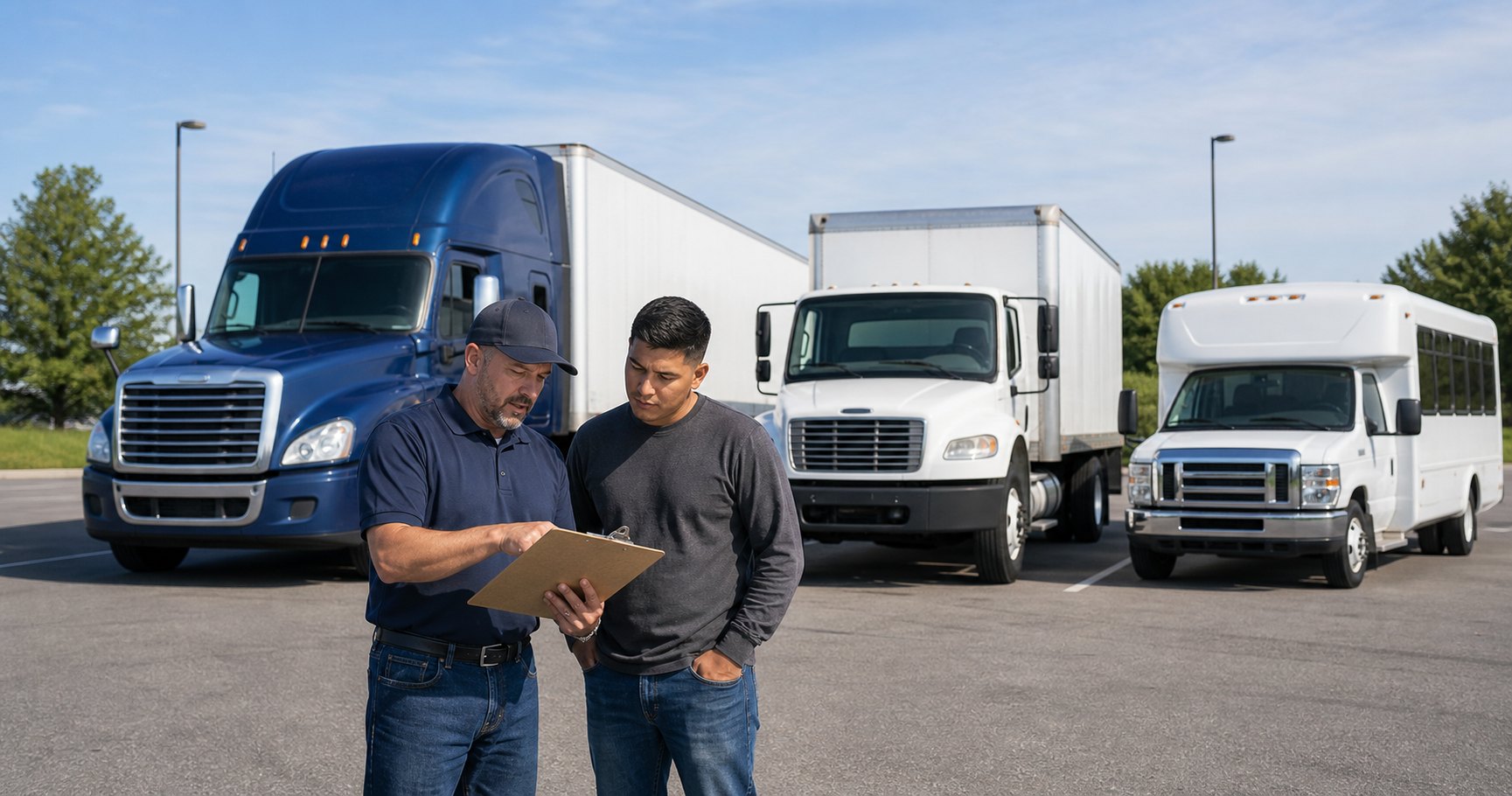
Not all CDLs are the same. The class you need depends on the type, weight, and use of the vehicle you plan to drive professionally.
Quick answer
Class A is for most tractor-trailers, Class B is for many single heavy vehicles, and Class C is for certain passenger or hazmat vehicles.
If you are pulling a heavy trailer, you are probably looking at Class A. If you are driving one large vehicle, such as a straight truck or bus, Class B is often the right lane. If the vehicle is smaller but carries 16 or more passengers or placarded hazardous materials, Class C may apply.
Class A
Class A CDL
A Class A CDL generally covers combination vehicles with a gross combination weight rating over 26,001 pounds when the towed unit is over 10,000 pounds. In real jobs, this usually means tractor-trailers, semi trucks, flatbeds, livestock carriers, and many tanker or freight combinations.
Tractor-trailers and semis
Long combination vehicles used for interstate freight, local freight, flatbed hauling, refrigerated loads, and many logistics jobs.
Freight and logistics
Class A is commonly used for long-haul trucking, regional routes, freight delivery, heavy hauling, and some tanker work with the right endorsement.
Can drive lower classes
A Class A holder can generally drive Class B and Class C commercial vehicles when properly endorsed and not limited by restrictions.
Class B
Class B CDL
A Class B CDL generally covers a single vehicle with a gross vehicle weight rating over 26,001 pounds. If it tows another unit, the towed unit is generally 10,000 pounds or less. This class is common for straight trucks, large dump trucks, city buses, tourist buses, and some local delivery vehicles.
Straight trucks and buses
Class B often fits one large vehicle rather than a tractor pulling a heavy trailer.
Local routes and passenger work
Drivers use Class B for city bus routes, school bus work, local delivery, dump truck jobs, and municipal vehicles.
Can drive Class C vehicles
A Class B holder can generally drive Class C commercial vehicles if the correct endorsements are on the license.
Class C
Class C CDL
A Class C CDL is for certain vehicles that do not meet Class A or Class B weight thresholds but still require a CDL because of how they are used. Common triggers include transporting 16 or more passengers including the driver, or carrying hazardous materials that require placards.
Passenger shuttles and hazmat vehicles
Examples can include large passenger vans, some shuttle buses, paratransit vehicles, or smaller hazmat delivery vehicles.
Passenger and hazmat roles
Class C may support shuttle driving, paratransit, airport transportation, smaller passenger operations, or certain hazmat delivery jobs.
Use and endorsement matter
A vehicle under Class A/B weight thresholds can still require a CDL because of passengers, school bus use, or placarded hazardous materials.
Weight threshold summary
CDL class weight thresholds and triggers
| CDL class | Common trigger | Plain-English meaning |
|---|---|---|
| Class A | Combination vehicle GCWR over 26,001 pounds with a towed unit over 10,000 pounds. | Most tractor-trailers, semi trucks, and heavy truck-trailer combinations. |
| Class B | Single vehicle GVWR over 26,001 pounds, with any towed unit generally 10,000 pounds or less. | Many straight trucks, large buses, dump trucks, and single heavy commercial vehicles. |
| Class C | Vehicle does not meet Class A/B weight groups but carries 16+ passengers or placarded hazardous materials. | Some passenger shuttles, paratransit vehicles, and smaller hazmat vehicles. |
Decision helper
Which CDL class do you need?
Driving a tractor-trailer or semi?
Start with Class A, especially if you are pulling a trailer over 10,000 pounds as part of a qualifying combination vehicle.
Driving a city bus or large straight truck?
Class B is often the match for one heavy vehicle such as a bus, dump truck, or straight truck.
Driving a hazmat van or 16-passenger shuttle?
Class C may apply if the vehicle is below Class A/B weight thresholds but carries passengers or placarded hazardous materials.
Not sure? Vehicle weight ratings, passenger use, endorsements, and state filing steps matter. Check your state before you apply or schedule tests.
Endorsements
CDL endorsements overview
Endorsements are extra permissions added to the correct CDL class. They can require extra knowledge tests, skills tests, background checks, or medical/document steps depending on the endorsement and state.
| Endorsement | What it allows | Practice page |
|---|---|---|
| H | Hazardous materials. | Hazmat practice |
| N | Tank vehicles. | Tanker practice |
| P | Passenger vehicles. | Passenger practice |
| S | School bus operation. | School bus practice |
| T | Double or triple trailers. | Doubles/triples practice |
| X | Combination tanker and hazardous materials. | Check state rules |
Next steps
Keep building your CDL plan
Start with the basics
New to commercial licensing? Review what a CDL is before choosing a class.
Learn the process
Once you know the class, study how to get your CDL from permit to skills test.
Practice knowledge topics
Most applicants should start practicing general knowledge topics early.
Back to the CDL hub for all CDL guides and state requirement pages.
CDL classes FAQ
Common questions about CDL classes
What is the main difference between Class A and Class B CDL?
Class A is generally for combination vehicles such as tractor-trailers when the combination meets CDL weight thresholds and the towed unit is over 10,000 pounds. Class B is generally for one heavy single vehicle, such as a straight truck or bus, with a lighter towed unit if any.
Can a Class A CDL driver drive Class B and Class C vehicles?
A Class A CDL can generally cover lower CDL classes when the driver has the proper endorsements and vehicle restrictions do not prohibit it. Always check the license restrictions, endorsements, and state rules before driving.
When would someone need a Class C CDL?
Class C usually applies when the vehicle does not meet Class A or B weight thresholds but is used to transport 16 or more passengers including the driver, or to transport hazardous materials that require placards.
Do endorsements change which CDL class I need?
Endorsements add permission for specific vehicle or cargo types, such as passenger, school bus, tanker, hazmat, or double/triple trailers. They do not replace the correct CDL class for the vehicle weight and configuration.
Official sources
Official CDL class sources checked
US Permit Prep is an independent study site and is not affiliated with FMCSA, any DMV, or any state licensing agency. CDL rules can change, so verify final requirements with official sources before testing or driving.